How to Price Wedding Photography in 2026 (Without Undercharging)
A clear framework for setting wedding photography prices: costs, packages, and the psychology that gets couples to say yes to your higher tier.
Most wedding photographers do not have a pricing problem. They have a confidence problem that shows up as a pricing problem. You know your work is good. You are just not sure a couple will pay what it is worth, so you quietly shave a few hundred off the number before you ever send it.
This guide gives you a way to set prices you can defend, build packages couples actually compare, and stop leaving money on the table at the most important moment of the booking conversation.
Start with your real cost per wedding
Before you think about what to charge, work out what a single wedding costs you to deliver. Not just the day, everything around it.
- Time. Inquiry calls, the shoot, culling, editing, delivery, and email back and forth. For most photographers this is 40 to 60 hours per wedding.
- Hard costs. Second shooter, travel, gear depreciation, insurance, backup drives, and software subscriptions.
- Overhead. Your website, marketing, accounting, and the slow months where no weddings come in at all.
If your floor comes out at 2,800 and you have been charging 2,200, you are not running a business. You are subsidising other people's weddings.
Build three packages, not five
Couples do not want a menu. They want a decision they can feel good about. Three tiers works because of a simple bias: most people avoid the cheapest option and cannot justify the most expensive, so they land in the middle. Design for that.
| Tier | Who it is for | The job it does |
|---|---|---|
| Essential | The budget-conscious couple | Anchors the low end, makes the middle look complete |
| Signature | Most couples | The one you actually want to sell |
| Legacy | The couple who wants everything | Makes Signature feel reasonable |
Put your target margin in Signature and load it with the things that cost you little but feel premium: a second shooter, an engagement session, and a beautiful way to relive the day.
Sell the outcome, not the deliverables
"800 edited photos" is a spec. "The morning your daughter got ready, the vows your dad cried through, the last dance, all in one place you will open again on every anniversary" is an outcome. Couples pay for the second one.
This is exactly where the delivery experience earns its keep. A gallery of files is a spec. An interactive story of the day is an outcome, and it is the kind of thing that gets forwarded to every guest and every newly engaged friend.
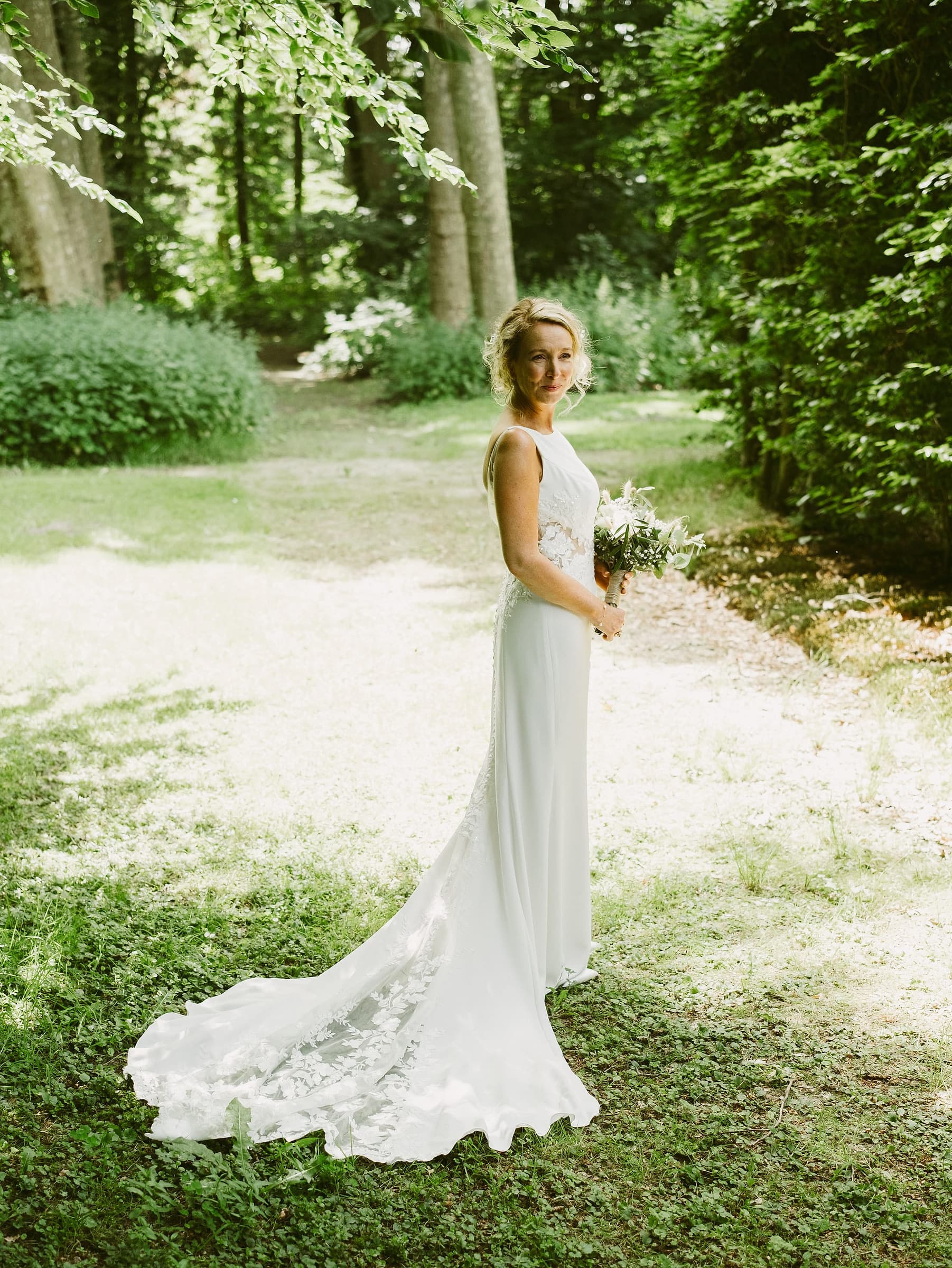
Deliver the day, not a folder of files
Revivre turns a wedding's photos and clips into one sleek, interactive story the couple shares, and that quietly markets you to every guest who opens it.
Raise prices the right way
You do not need to double your rates overnight. Raise them in steps, and use demand as your signal.
- When you are booking more than 70 percent of the couples who inquire, you are priced too low. Raise the next booking by 10 to 15 percent.
- Keep raising until your inquiry-to-booking rate settles around 40 to 50 percent. That is the band where you are priced right and still busy.
- Grandfather nobody. New prices apply to new inquiries, full stop.
The bottom line
Price from your real costs, present three clear tiers, sell the outcome instead of the file count, and let demand tell you when to go up. Do that and the number on the page stops being something you apologise for and starts being something you stand behind.
The couples who are right for you will pay it, especially when what they get back is not a download link but the whole day, relived.