Golden Hour Wedding Photography: A Complete Guide to Timing and Light
How to calculate golden hour for any wedding date and venue, protect it on a tight timeline, and actually shoot into it: backlighting, flare, and positioning that get couples the photos they'll frame.
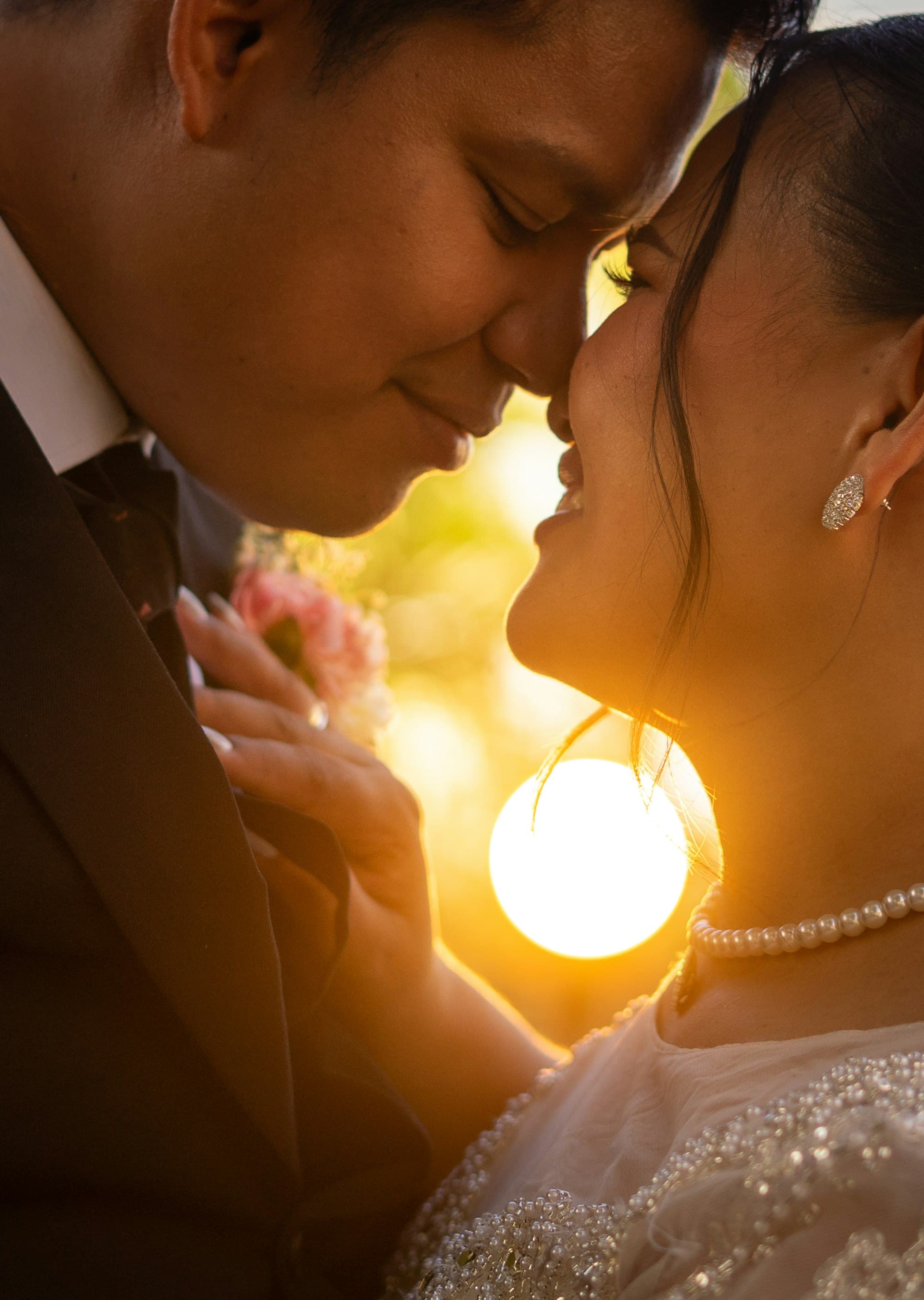
Ask a couple what photo they want most from their wedding day and, without knowing the term for it, most of them describe golden hour: warm light, long shadows, that soft glow that makes ordinary grass look like something out of a film. It is the most requested look in wedding photography, and the most commonly missed, usually because it quietly got scheduled over by dinner or the first dance.
This is the part of the day worth protecting on purpose. Here is how to calculate it, build it into a day that is already tightly booked, and actually shoot it well once you are standing in it.
What golden hour actually is
Golden hour is the window right before sunset (and, less used, right after sunrise) when the sun sits low enough that its light travels through more atmosphere, scattering the harsh blue tones and leaving warm, soft, low-angle light behind. Shadows get longer and gentler, skin tones flatter, and backlighting becomes possible without blowing out a face.
It is not a fixed 60 minutes. Depending on the season and how far the venue sits from the equator, the useful window runs anywhere from about 20 minutes in high summer near the equator to well over an hour at higher latitudes in spring or autumn. Always check the actual window for the date and venue, never assume it matches the last wedding you shot.
Protect the window before the day starts
Golden hour never gets missed because a photographer forgot it exists. It gets missed because five other things ran long first: hair and makeup, family formals, a cocktail hour that started late. Building buffer into the full-day timeline is what actually protects this slot, but two things are worth doing specifically for golden hour:
- Name the block on the written timeline, with a real time, not "sunset portraits, TBD." A specific line item is far harder for a reception to quietly swallow than a vague one.
- Warn the planner and the couple in advance that you will pull them out for 15 to 20 minutes during cocktail hour or right after dinner. Said once in the planning stage, this becomes an expected pause instead of an awkward interruption on the day.
If the ceremony and reception timing genuinely leaves no window at sunset, a first-look session earlier in golden light, or a short "sunset break" that pulls the couple away from dancing for ten minutes, both work as a backup. Couples say yes to this far more often than photographers expect, once they understand what those ten minutes buy them.
Shoot into the light, not around it
Once you are standing in the window, the temptation is to keep the sun at your back out of habit. Golden hour rewards the opposite.
- Position the couple so the sun sits behind or beside them, not behind you. Backlighting at this time of day wraps a warm rim of light around hair and shoulders that flat, front-lit portraits never get.
- Shoot a few frames straight into the sun. A touch of lens flare reads as intentional and cinematic at golden hour in a way it does not at noon. Move the sun just outside the edge of the frame if you want the flare without losing detail in the couple's faces.
- Use a reflector or a wall, dress, or bouquet as a bounce to fill in shadows on the shaded side of a backlit subject, rather than reaching for flash and flattening the light you came outside for.
- Get low or shoot through something (grass, branches, a doorway) when the sun is close to the horizon. The extra distance the light travels through adds more of the soft, hazy quality that makes these frames stand out from the rest of the gallery.
Make it the peak of the story, not a photo buried mid-gallery
Every gallery has a few dozen good photos and a small handful of frames a couple will genuinely stop scrolling for. The golden hour portrait is almost always one of them, and it deserves to land like one, not sit sandwiched between two reception candids in a flat grid where it gets the same weight as everything else.
Give your best light its own moment
Revivre sequences a wedding as a scroll-driven story, so the golden hour portrait can land exactly where it emotionally belongs, building toward it the way the day itself did, instead of getting lost as thumbnail forty-one of two hundred.
The bottom line
Golden hour is not luck, and it is not something you find time for if the day allows it. Calculate the real window months ahead, name it on the timeline so it survives contact with a running-late reception, then shoot into the light instead of around it once you are standing in it. Do that consistently and it stops being the photo you hope you get, and becomes the one you can promise.