Concert Photography: Book Work, Shoot It, Deliver Fast
Concert photography as a business: who actually pays, how to get a photo pass, camera settings that survive stage light, and delivering the show overnight.
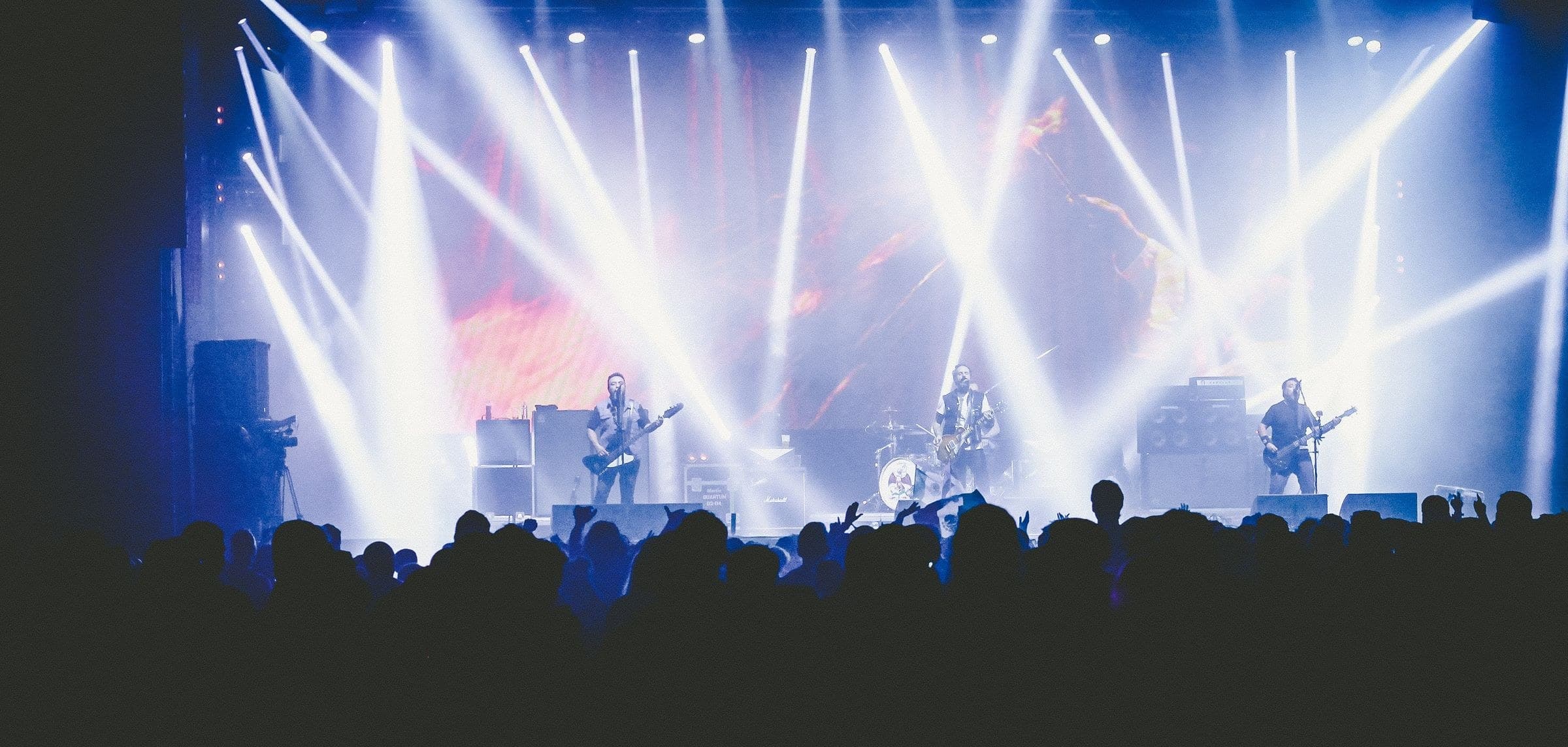
Concert photography is the rare niche where the work sells itself and the business almost never does. The photos are loud and easy to love, so everyone wants to shoot a show. Getting paid for it, getting back in the room next month, and getting the images out while anybody still cares is where most people quit.
The good news is that the room is small. Very few photographers treat a gig like a job with a client, a deadline and a rate. Do that and you stop being the person who shot one great frame from the barrier and start being the one a venue calls every week.
Work out who is actually paying you
"Can you shoot our show" comes from four different people who want four different things. Know which one you are talking to before you agree to anything.
- The band or artist. Wants images for socials, press and the next release. Books you directly, cares most about how they look and how fast they can post, and becomes a repeat client the moment you make their feed better.
- The venue. Wants a steady stream of content for its own channels and its listings. Books constantly, cares about reliability over art, and is the client that turns one night into a calendar.
- The promoter or festival. Needs a whole lineup covered across a day or a weekend, for marketing the next edition. Bigger scope, better rate, and the brief is coverage rather than a hero shot.
- The publication or PR. Wants usable frames on a tight deadline, credited, often for a review filed that same night. Pays less per image, but the credit and the access open the doors the other three walk through.
Access is the product, so get the pass first
Nobody books a concert photographer for their camera. They book you for the frames you can get from where you are allowed to stand. The pass is the job.
- Go through the band or the PR, not the box office. A photo pass comes from whoever controls the guest list for that show. Email early, keep it short, and say exactly who you are shooting for.
- Learn the three-song rule. At bigger shows you get the first three songs, no flash, from the pit, then you are out. Plan for it. Your whole shoot is twelve minutes, so know your settings before the lights come up.
- Shoot small rooms to build the reel that gets you big rooms. Local venues and support slots have no pit and no rules, which is where you learn to work a stage. A venue that trusts you at a Tuesday gig is the one that clears you for the sold-out Friday.
- Be the easiest photographer to have in the building. Turn up early, stay out of the sound desk's way, never block a paying punter, and deliver when you said you would. Access compounds. One good night is a standing invitation.
Settings that survive stage light
Stage lighting is the hardest light in photography: it is dark, it changes every beat, and it swings from deep red to blown-white in a second. Stop chasing it and set your camera to cope with it instead.
- Shoot manual ISO, or cap auto ISO high. You will live between ISO 1600 and ISO 6400. A little noise in a sharp frame beats a clean blurry one every time.
- Shutter at 1/250 or faster. Performers move more than you expect. Drop below 1/200 and half the set is motion blur you cannot fix.
- Aperture wide, around f/2.8. It buys you light and lifts the performer off a messy background. A fast prime earns its price on the first gig.
- Spot meter the face, not the scene. The stage is mostly black, so the camera wants to overexpose. Meter for the person in the light and let the darkness stay dark.
- Expose for the red. Red light clips first and takes all the detail with it. When the wash goes red, drop your exposure and protect the highlights.
- White balance you can trust later. Shoot raw and set a manual Kelvin around 3200 to 3800 so your files are not fighting a new colour every frame.
Shoot the night as a story, not a highlight
A folder of forty crowd-pleasers all looks the same by the third one. A night has an arc, and the photographers who get rebooked shoot the arc, because that is what a band, a venue and a promoter can all use.
- The room filling up. The queue, the merch desk, the empty stage waiting. These set the scene and nobody else bothers to shoot them.
- The first song. The lights hit, the crowd lifts. Your cleanest, safest frames are here while you still have the pit.
- The moment the room turns. The drop, the singalong, the hands up. One frame that holds the whole feeling of the night.
- The band working. The guitarist mid-jump, the drummer lit from behind, the singer's face in a quiet bit. The frames the artist actually reposts.
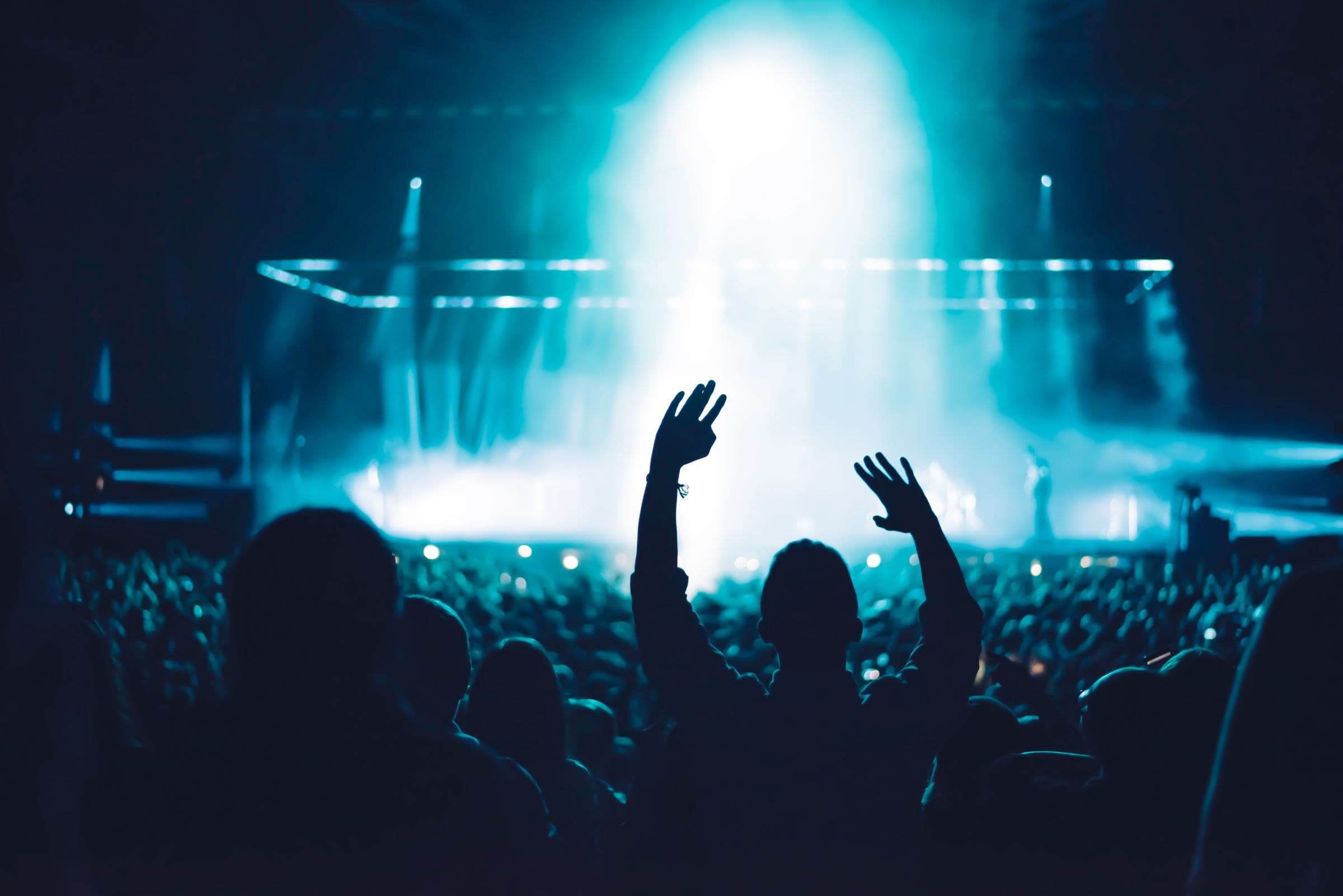
- The crowd from the stage. If you can get it, a shot looking back at a full room is the one the venue and the promoter buy every time.
- The encore and the walk-off. The end of the story. Sweat, lights up, arms around each other.
Get those and you have not just covered the gig, you have told it. That is the difference between a photographer who sends nice pictures and one who sends the night back to the people who made it.
Deliver overnight, because that is the product
A gig is news, and news has a shelf life measured in hours. The band wants to post before they have left the venue. A set that lands two days later arrives after the audience has already moved on to the next show.
- Send five frames within the hour. Edited, ready to post, no watermark. This single habit gets you tagged, credited and recommended more than any portfolio.
- Deliver the full set by morning. Cull hard on the night, edit fast, send one link. Nobody needs two hundred frames. They need the thirty that are the night.
- Send it as a link, not a folder of files. The band opens it on a phone on the tour bus and forwards it to their label. A zip is useless there. The gallery speed guide covers what actually makes a link fast on a phone on bad venue wifi.
- Label your sizes. A web set for socials and full resolution for print and press, so nobody posts a 40MB file or prints a thumbnail.
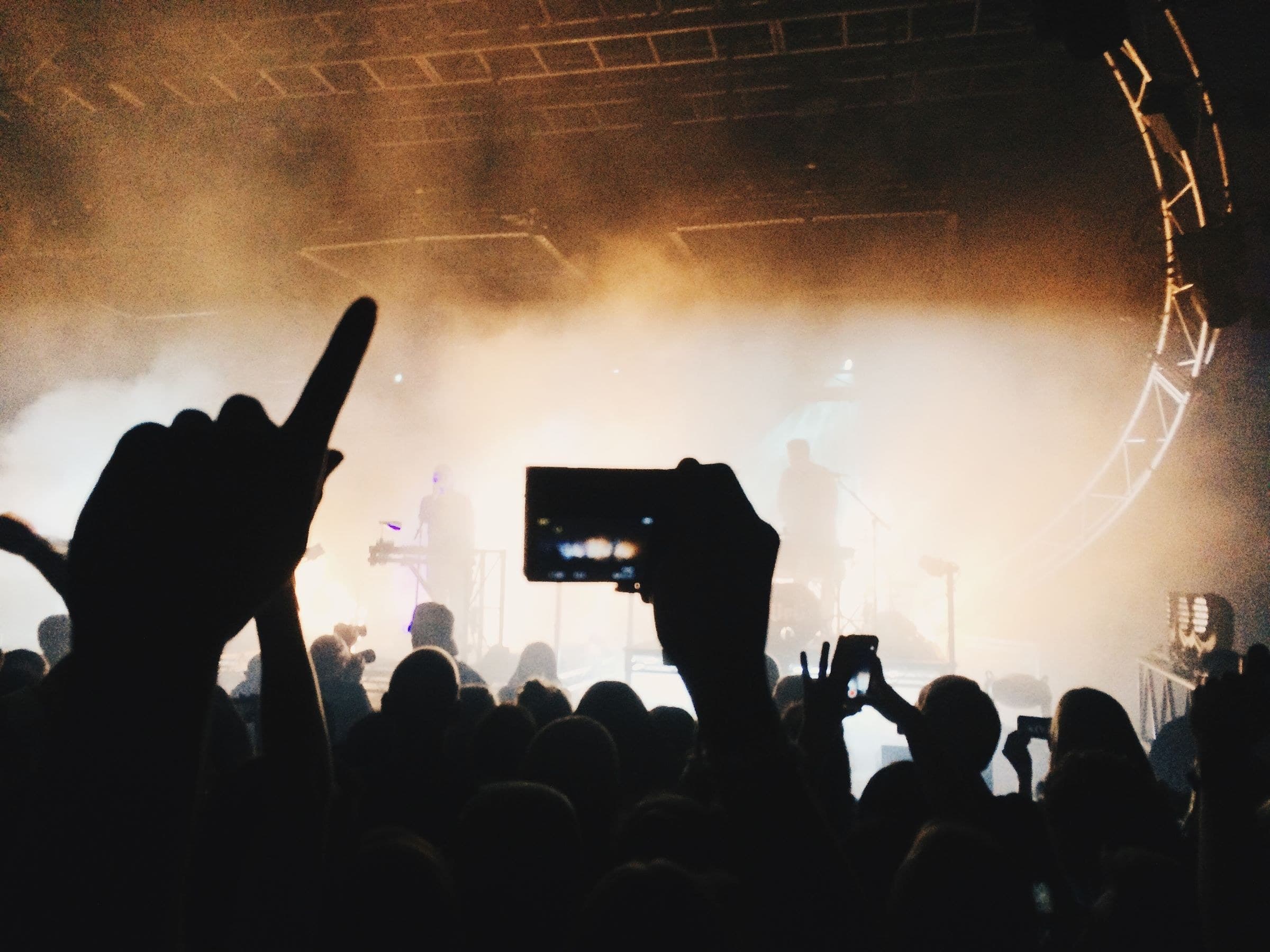
Turn the gig into a scrolling story
Everybody at that show left with shaky vertical clips. What none of them have is the night laid out end to end, in order, the way it actually felt. That is the thing worth selling on top of the photographs.
Put the set on its own link that scrolls from the empty stage through the first song, the drop, the crowd and the encore, with a couple of your video clips dropped in where the room went off. It reads like being there again rather than like scrolling a grid, and it works on a phone, which is where the band, the label and the fans will open it. There is more on why that holds attention in why scrolling stories work.
Sell it as the piece the band pins for the tour, the page the promoter links from the next lineup announcement, or the recap the venue posts the morning after. It also outlives the night: it stays in your portfolio as proof of what a full show looks like in your hands, which books the next one.
Send the whole night back, not a folder of frames
Upload the set once. Deliver a fast link the band can forward from the bus, and publish the same night as a scroll through the show, video clips included, that a promoter can link the morning after.
Turn one night into a roster
A single great gig is a portfolio piece. A relationship with a venue is a business, and concert work rewards relationships more than almost any niche because the same rooms host shows every week of the year.
- Pick two or three venues and become their photographer. Regular rooms with regular listings are a calendar that refills itself, the same way five estate agents are in the real estate guide.
- Say yes to the small shows. Support slots and local nights are where the next headliner is playing to forty people. Shoot them well and you grow up the bill together.
- Get the credit every time. A photo credit is a link and a reputation. Chase it politely and never let a repost go up without your name on it.
- Rank for your city. "Concert photographer" or "band photographer" plus a place name is a search with clear intent and thin competition in most markets. The SEO guide covers the pages worth writing, and your portfolio site is where a tour manager lands before they book you.
- Get paid, and put it in writing. Access is not payment, and "exposure" does not cover your rent. Agree a rate and a licence before the show. The contract essentials guide has the shape of a simple one.
The short version
Find out who is paying and what the photos are for, then get the pass, because access is the whole job. Set your camera to survive stage light before the first song: high ISO, fast shutter, wide aperture, and meter for the face. Shoot the night as an arc rather than a highlight reel, and deliver it overnight while it is still news.
Then give the band a scroll through the show they can forward, become the photographer two venues rely on, and get your name on every repost. That is how a night in the pit turns into a calendar full of them.