Corporate Event Photography: Rates, Shots, Delivery
How to win and keep corporate event work: a day rate with usage included, the shot list a marketing team needs, and delivery while the event is still news.
A corporate event client is not a couple. It is a marketing manager with a budget line, a deadline, and a boss who will ask on Monday why the photos are not on LinkedIn yet. Nobody at that company will cry over your photos. They will judge them on whether the CEO looks good, whether the room looks full, and whether the files arrived in time to be useful.
That sounds unromantic. It is also why corporate work pays reliably, books a year ahead, and repeats. Get the business side right and the shooting is the easy part.
Quote a day rate with usage written into it
The single most expensive mistake in event work is quoting a number for your time and saying nothing about what the company may do with the pictures. Six months later your photo is on a billboard and you are the one who has to raise it, which is an awkward conversation you can avoid entirely with two sentences in a quote.
Build the quote in layers:
- The shooting fee. Half day (up to four hours), full day (up to eight), or a multi day conference rate. Say what happens after the eighth hour and what it costs, before it is 11pm and somebody asks you to stay.
- Post production. Culling, colour, and delivery are hours of work. They are not "included", they are quoted, even if you present one combined number.
- The licence. Be specific and be generous where it costs you nothing. Most corporate clients need internal use, website, social, and press for a set period. Paid advertising and out of home are worth pricing separately.
- Expenses. Travel, parking, a second shooter for parallel sessions, hotel for anything starting before 7am the next day.
- Rush delivery. If they want a gallery the same night, that is a real service. Price it rather than absorbing it.
Two lines that belong in every event contract, alongside the basics in the contract essentials guide:
- Model and property release responsibility sits with the client. They control the room and the guest list, so they handle attendee consent and tell you who cannot be photographed.
- You keep copyright and the right to show the work, with a named exception for anything under embargo. Marketing teams understand this language, because it is how they buy everything else.
The brand photography guide goes deeper on licensing for commercial clients, and the same structure applies here.
Get the brief before you get the schedule
A run of show tells you when things happen, but not which of them matters. Ask these questions on the booking call and write the answers on a card you keep in your pocket:
- What are these photos for? Next year's event page, a recruitment campaign, the annual report, and a press release all need different frames.
- Who must appear, by name and face? Ask for a photo of the CEO, the keynote speaker and the sponsors before the day. Missing a VIP is the one unforgivable error in event work.
- What does the sponsor need to see? Logos on the step and repeat, a busy stand, a hand shaking a hand under their banner. Sponsors renew when they see proof.
- How full will the room look, honestly? If two hundred seats hold ninety people, you shoot tight from the front rather than wide from the back, and everyone stays happy.
- What are the deadlines? Something for social tonight, everything else by Friday, is the usual answer. Ask rather than assume.
- What crops do they need? Horizontal for the website, vertical for stories, and a bit of headroom for a banner overlay. Framing for that during the day costs nothing and saves a re crop request later.
Shoot the four buckets a marketing team uses
Every corporate gallery gets used in four ways. Shoot deliberately for each, and check them off during the day rather than hoping at the end.
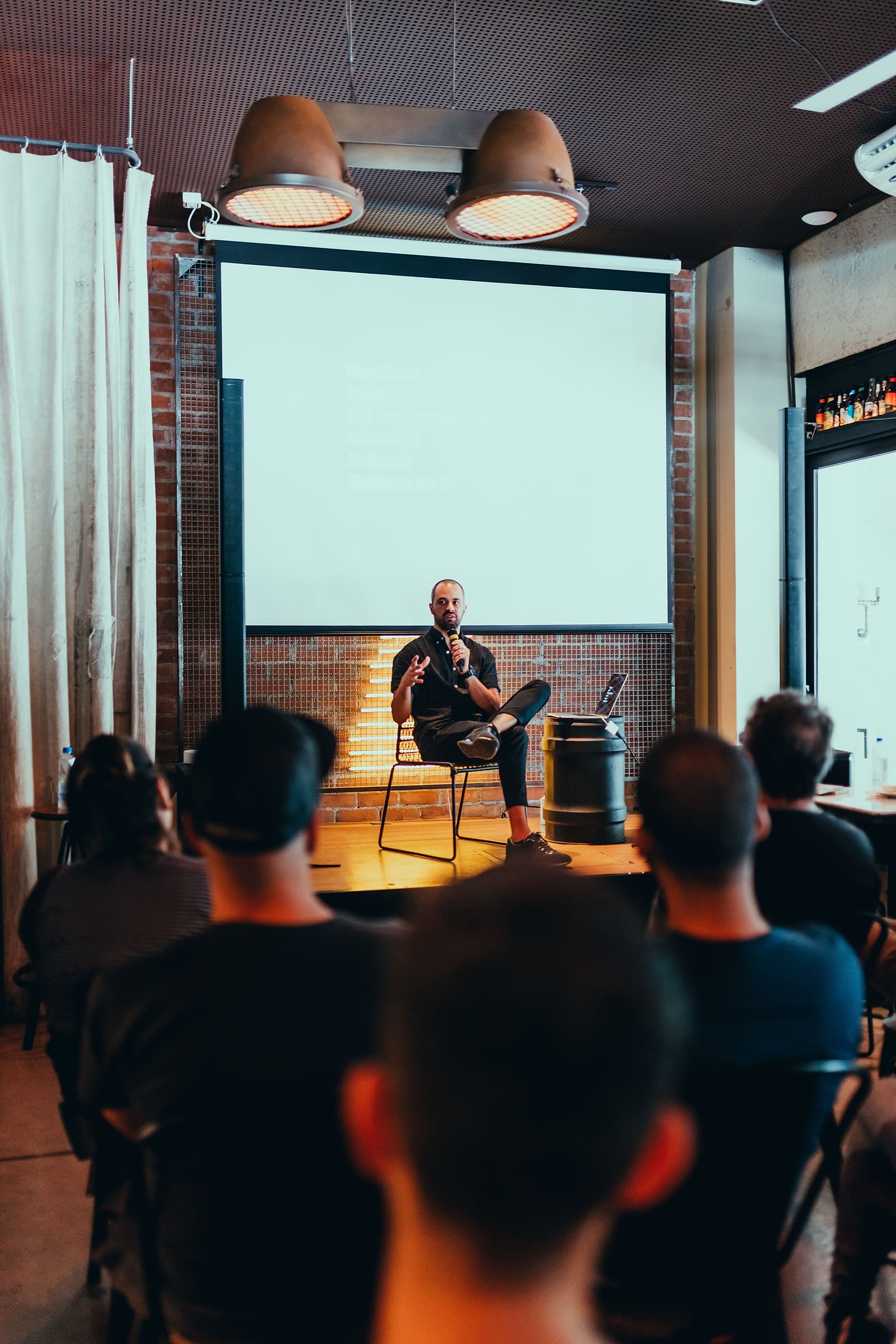
- The stage. The speaker mid gesture, eyes open, mouth in a natural position, the slide readable behind them. Get one clean frame of every single speaker before you go looking for anything creative.
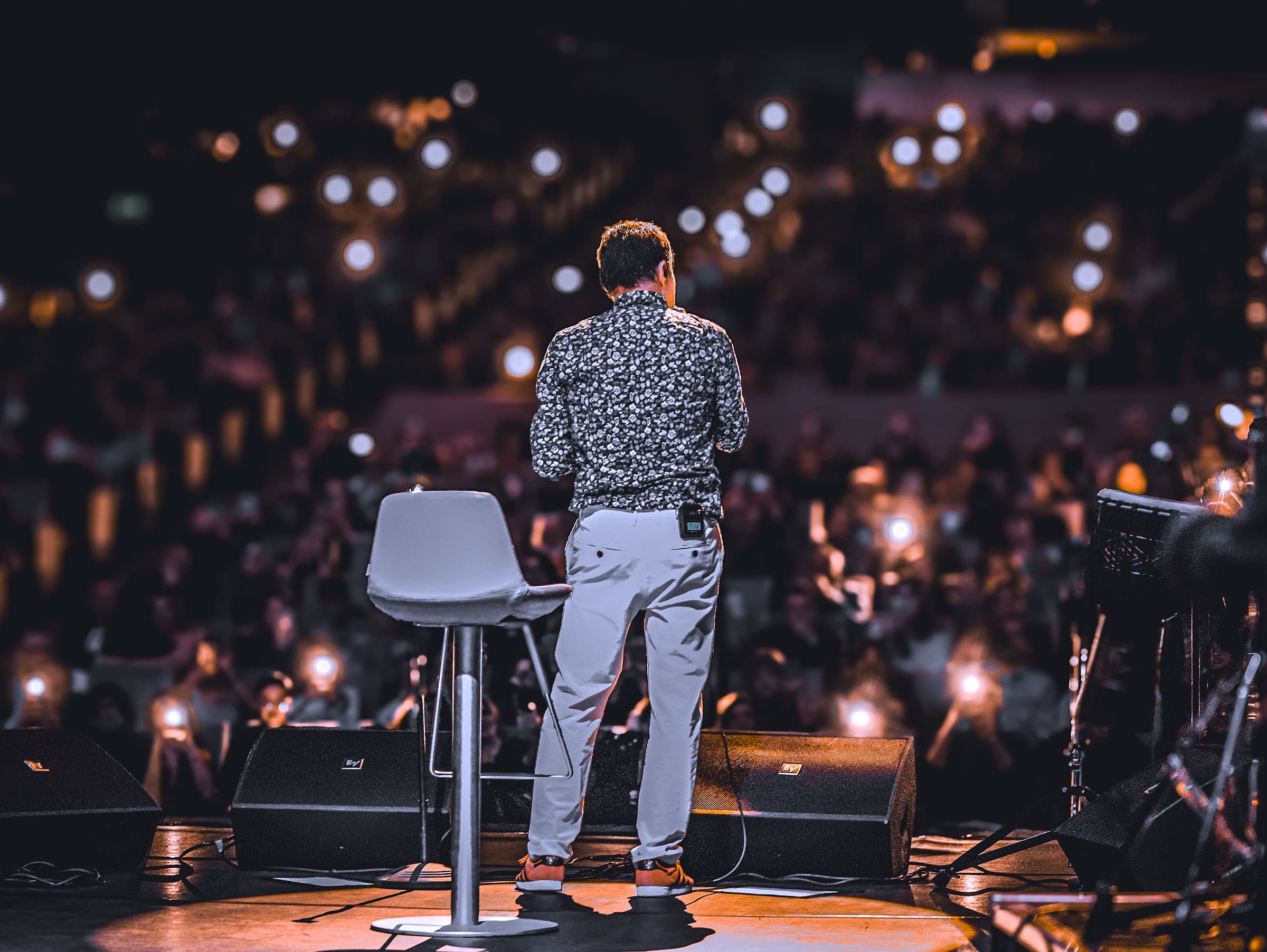
- The room. Wide frames that show a full, engaged audience: heads up, phones out for the right reasons, laughter in the third row. This is the photo that sells next year's tickets.
- The people. Handshakes, coffee queue conversations, name badges, the moment two strangers start talking at a stand. Candid networking frames are what a company puts on its careers page.
- The details and the brand. Signage, lanyards, the catering, the stand build, the branded wall. Marketing spent money on all of it and will want proof it existed.
A working rhythm for a long day: shoot the stage during the first ten minutes of each session, work the room during the middle, and photograph the details in the gaps. Back up to a second card or a drive at every break, not at the end of the night. The backup system guide covers a routine that survives a long day.
Deliver in two waves: tonight and next week
Event photos age faster than any other work you do. A conference is news for about 48 hours, and then it is an archive.
- Wave one, the same night. Fifteen to twenty five photos, culled fast, colour corrected, nothing precious. The comms team posts them while the hashtag is still moving. A quick culling pass like the one in the culling workflow guide is what makes this possible without staying up until 3am.
- Wave two, within a week. The full set, properly finished, organised by session or by hour so somebody can find "the panel at 2pm" without scrolling through eight hundred files.
- Name the files usefully. Speaker names and session titles beat sequence numbers. It takes ten minutes and it is the thing a marketing manager mentions when they recommend you.
- Deliver with download rights that match the licence, and make the whole set downloadable in one click. A corporate client will not tick eight hundred boxes.
- Make the link fast on a phone. Half the people opening it are commuting. The gallery speed guide covers the usual culprits, and the free gallery speed test will tell you where you stand.
Hand the marketing team a recap page, not a folder of files
Deliver the day as a page that scrolls through it in order, keynote to closing drinks, with the video clips in place and a download link at the end. It gets forwarded to sponsors and speakers on the same day, and every person who opens it sees who shot it.
Repeat business is the whole model
An events client books four times a year for a decade and tells the other three companies in their building, which is why the boring parts are worth being good at.
- Send the wave one link the same night, or first thing the next morning, with one line under it: "here are the photos from today, the full set lands Thursday." Fast and specific beats polished and late.
- Ask for next year's date before you invoice. They already know it. Nobody else has asked.
- Keep a contact card per company, not per event. Marketing managers move to new companies and take their suppliers with them, which is the quiet way this business grows.
- Invoice within 24 hours, with clear payment terms. Corporate accounts pay on time when the paperwork is easy and slowly when it is not.
- Send a small set of favourites to each speaker, with permission from the client. Speakers have audiences of their own, they credit photographers, and they get booked by other event organisers.
- Build the same referral habit you would with wedding vendors. Venues, AV crews, and event producers all get asked for a photographer recommendation every month. The vendor referral guide works exactly the same way in this market.
The short version
Quote a day rate with usage written into it, get a brief rather than only a schedule, and shoot the four buckets every marketing team uses. Send a small set the same night, the full set within a week, organised so a busy person can find what they need.
Corporate work rewards being easy to work with more than it rewards being brilliant. Being both is how you end up on the calendar every year without ever pitching again.