Maternity Photography: The Session That Books the Newborn
How to run maternity sessions as a business: when to book, what to charge, the three setups that sell, and delivery that books the newborn shoot too.

Maternity is the only portrait session where the client is already planning her next purchase while you shoot. She knows a baby is coming. She knows people will want photos. If she leaves your session without a newborn date in the calendar, somebody else will get that booking, usually a photographer she found at 2am on a due date forum.
So treat maternity as the first half of a two session client. That one decision changes how you book it, what you charge, how you shoot it, and how fast you send the photos.
Book at 32 to 36 weeks, and book the newborn session in the same email
The bump photographs best in the last stretch of the second trimester and the first weeks of the third. Later than 36 weeks and you are gambling on an early arrival.
- 32 to 36 weeks for a first baby. Round bump, still comfortable standing for an hour, still able to walk to a location.
- 28 to 32 weeks for twins, or for anyone who has been told to expect an early delivery. Ask at the enquiry stage, not on the day.
- Shoot at the end of the day. Feet swell, energy drops, and the light is better anyway. A 7pm summer session beats a 2pm one twice over.
- Put the newborn date in the same confirmation email. "Your maternity session is on the 14th. I will hold the two weeks after your due date for the newborn session, no payment needed until the baby arrives." Nobody says no to a hold.
That last line is the whole business model. The newborn session guide covers how to run the second half once the baby is here, including why you book a window rather than a date.
Price it as one client, not two sessions
A maternity session priced on its own tends to land somewhere embarrassing: expensive enough that a couple hesitates, cheap enough that you resent the drive. Price the pair instead.
Work it out in this order:
- Cost the newborn session properly first. It is the longer, slower, more valuable one, and it sets the ceiling.
- Price maternity at roughly half of it. Ninety minutes, one location, less editing, no on call fortnight to hold open.
- Offer the two together at a number below the sum. The saving should be real and small. Enough to make booking both the obvious choice, not so much that the newborn session becomes a giveaway.
- Take the deposit for both up front. This is the point. A held date with no money attached is a maybe.
- Leave room for prints and an album at the end, sold after the newborn session when there are two sets of photos to combine.
If your numbers feel soft, the fix is not a discount. It is being specific about what arrives: how many edited photos, how they are delivered, how long the link stays live, what a wall print costs. The same logic runs through how to price wedding photography and packages that sell.
Build the session around three setups
Ninety minutes disappears fast when someone is carrying an extra fourteen kilos. Pick three setups and shoot each one properly instead of chasing outfit changes.
- The full length frame. Wide, environmental, the one that goes on the wall. Shoot it first while everyone is fresh and the light is highest.
- The connection frames. Partner behind, hands on the bump, foreheads together, a real conversation rather than a pose. Give them something to do: "tell her what you think the baby looks like."
- The detail set. Hands, the ring, the profile against a bright window, an older sibling's palm on the bump. These are the frames that get printed small and kept forever.
Three small corrections that show up in every frame:
- Pose from the feet up. Weight on the back foot, front knee soft, shoulders turned toward the light. It lengthens everyone and it takes five seconds to correct.
- Give the hands a job. Under the bump and above it, never gripping it flat from the front. The most common maternity mistake is a hand that looks like it is holding a beach ball.
- Check the chin and the elbows every few frames. Chin forward and slightly down, elbows away from the body. Both are invisible until you are editing, and both are unfixable then.
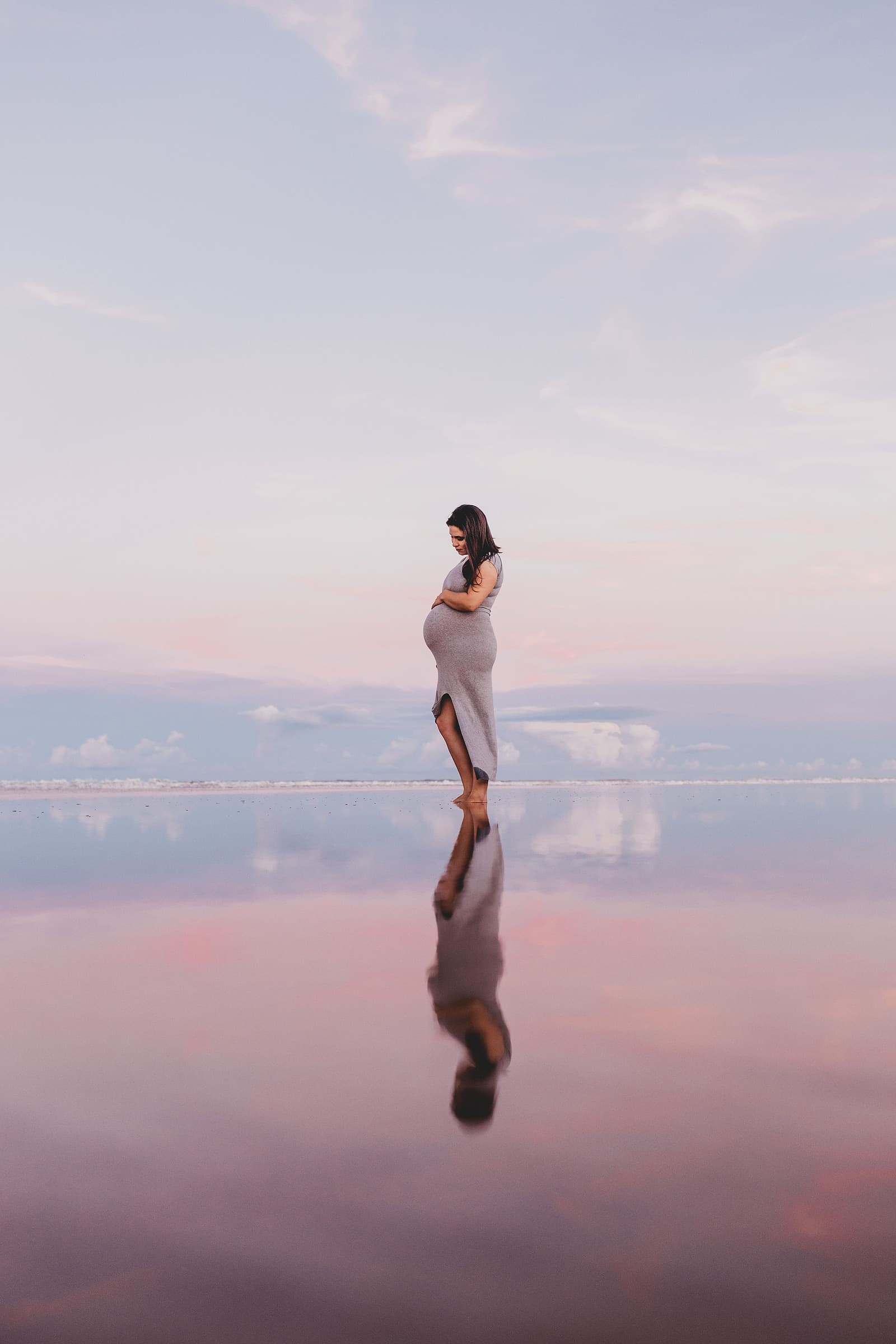
Deliver in a week, in an order that reads like an announcement
Maternity photos have a short shelf life for a reason: the client is about to become a different person in the eyes of everyone she knows. She wants to post one of these before the baby comes, not after.
- Send three photos within 48 hours. No watermark, ready to post. They will go out that night, tagged, to exactly the audience you want to reach.
- Deliver everything within a week. Forty to sixty edited photos is plenty. A hundred and twenty is not generosity, it is a decision you have handed back to a tired client.
- Sequence the set like a story. Wide, close, the two of them, the hands, the quiet last frame. A folder sorted by filename is not a story, and it is why so many galleries get opened once and never reopened.
- Make the link work on a phone in one hand. Her mother, her partner's mother, and four group chats will open it on hotel wifi. The gallery speed guide covers what actually makes a gallery slow, and you can measure yours with the free gallery speed test.
- Ask for print picks, not a sales call. "Choose your five for the album and your one for the wall." A pregnant woman at 34 weeks will not schedule a call, but she will tick five photos in bed. There is a full walkthrough in how to get clients to choose album photos.
Send the bump session as a link the family opens once and forwards twice
Put the session on its own private page that scrolls like a short film, with a password if they want one. Add the newborn photos to the same link a month later and the whole beginning of the story sits in one place, with your name on it every time somebody opens it.
One bump, three years of work
The couple you photograph this month is at the start of the most photographed stretch of their lives. Almost nobody plans for it out loud.
- Offer the first year plan while she is looking at the maternity photos, not in a newsletter in four months. Newborn, sitting up, first birthday, paid monthly.
- Diarise your own follow up for two weeks after the due date. One message: "Thinking of you both. Ready when you are." That is the whole email.
- Ask for one specific referral. Not "tell your friends", but "if anyone in your antenatal class is due after you, send them your link."
- Ask for the review within a week of delivery, while it still feels like the best week of the year. Timing and wording are in the reviews guide.
- Post the work with permission and answer a question people search for: when to book a maternity session, what to wear, whether to bring the partner. That is how maternity photographers get found without paying for ads, and the SEO guide explains the mechanics.
The short version
Book at 32 to 36 weeks and hold the newborn dates in the same email. Price the two sessions as one client, with a deposit that makes both real. Shoot three setups properly instead of chasing outfit changes. Deliver in a week, in an order that reads like an announcement, on a link that opens fast on a phone.
Do that and you stop selling single sessions to strangers. You start photographing families who already know who they call next.